In some ways, it's never been a better time to be a PC gamer. Beyond the glut of games in almost every genre you can think of, it's never been easier to put together (or buy) a brilliant gaming PC for less—with one notable caveat. While a great CPU, motherboard, RAM loadout and SSD combo can be had for less than $500, modern graphics card pricing means you'll potentially be paying the same again (or much, much more) for a GPU capable of running demanding games at high frame rates and a respectable resolution.
One single component creates a bottleneck, a barrier to entry for those of us not on the megabucks—and it's the sort of thing that makes me wonder about the future of our entire hobby.
GPU prices now, compared to the past
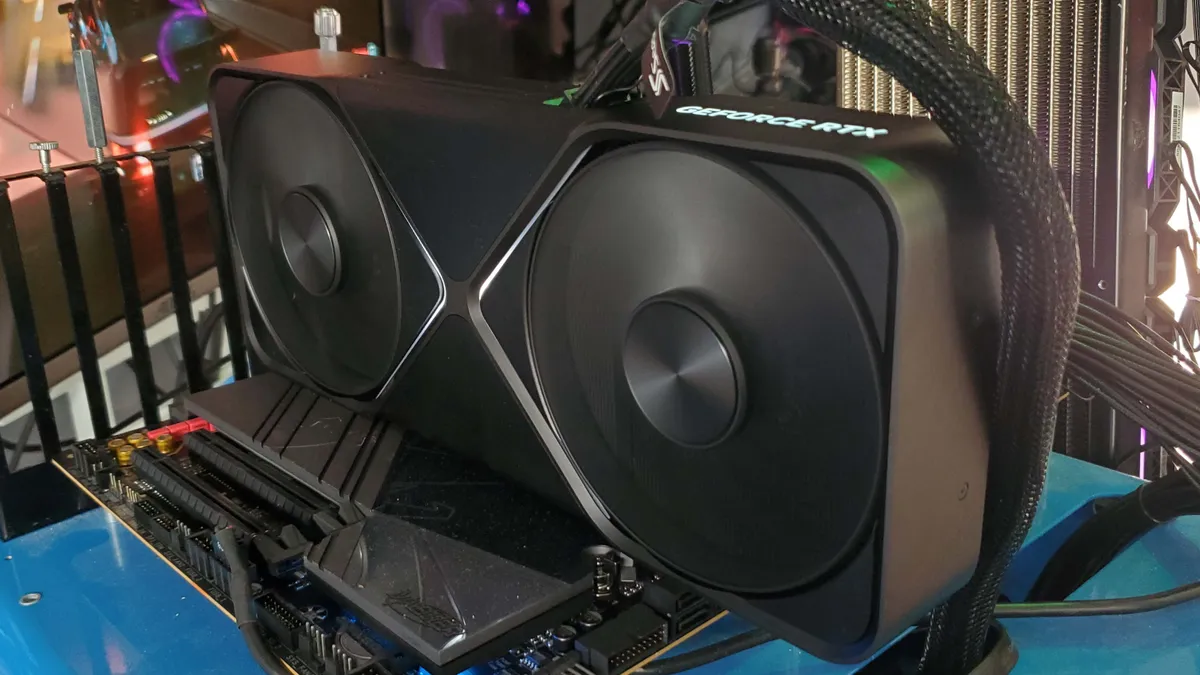
, $200 in today's money is equivalent to roughly $390. Should you wish to buy the best graphics card today in terms of performance, you'll be looking at the , costing the best part of $2,500 at current prices.
But, before you go rushing to the comments section, I am aware that the top-spec Nvidia card is something of an outlier—so let's compare the Riva TNT2's inflation-adjusted price to the company's current offerings further down the stack. The , for instance. It's technically a card with a $999 MSRP, but the cheapest one I can find on our page at the moment is a mahoosive $1,300.
Let's go lower, then. How about the excellent , our current best mid-range graphics card pick? Well, it's got a $749 MSRP, and the cheapest one I can find . The vaguely disappointing ? $550. In fact, the closest you'll get to that $390 figure in today's graphics card market is the 8 GB variant of the , and while it's a decent little card, it's so far away from the top of the stack it needs binoculars to make out the 's cooling fins.
And it's not just Nvidia cards that have fallen victim to silly prices, either. AMD has decided to skip over the high-end GPU market this generation, but its excellent and cards are still on the market for serious amounts of cash. The former will set you back around $600, while the XT is . These are mid-range GPUs. Which makes me wonder—how is anyone on a tight budget these days expected to build a powerful, somewhat future-resistant gaming rig like I did back in the mists of time?
How did graphics cards become so expensive?
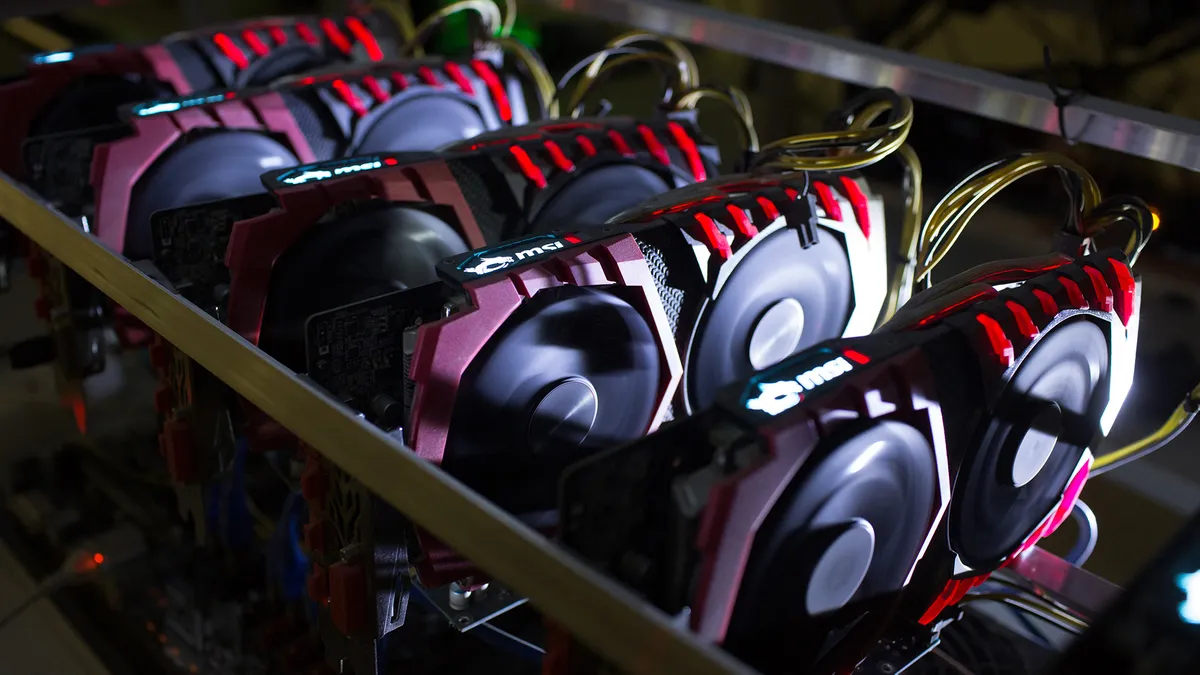
Powerful is the operative term here, of course. Each of these cards is many, many orders of magnitude faster than an Nvidia GPU from 1999, and manufacturing hardware of this level isn't cheap. But that's merely one small piece of a much larger picture, and we can trace the majority of the great jump in graphics card pricing back to the two Cs of the apocalypse: and covid.
In the case of the former, the crypto mining PIGSPIN เครดิตฟรี 100 boom was devastating for GPU stocks. Repeated surges in , and therefore Ethereum pricing (and the rise of other proof-of-work altcoins riding on their coat-tails) from 2017 onwards drove sky high. Anything capable of crunching out digital coins was being snapped up in vast numbers by crypto miners around the world, many of which found themselves in vast facilities dedicated to wringing out the great crypto craze for all it was worth.
This, combined with and supply chain issues, began to push GPU pricing into the stratosphere. The GTX 980 Ti launched in 2015, before the crypto boom had reached its stride, for a $649 MSRP. The GTX 1080 Ti was released in 2017, at the beginning of the boom, for $699. The launched just over a year and a half later, crypto boom in full swing, for $1,200.
...the situation is nothing short of catastrophic for graphics card pricing in general.
Three and a half years, $551 extra on the MSRP of Nvidia's equivalent high-end GPU. Economics is a complicated subject, and I'm far from an expert. But it's not difficult to see how high demand and limited supply drives up GPU pricing, and how us gamers bore the brunt of the increases.
And then, in 2020, the coronavirus hit. The world's financial system and supply chain buckled as we all took to our homes, weathering the storm of a virus that caused unprecedented levels of global uncertainty. The crypto market boomed once more, and , which, combined with an and a massive new demand for home entertainment, compounded our pricing issues no end.
By the time the world righted itself to its more usual state, we were left with an unfortunate fact: high end GPUs can now cost $1,000+, and even budget huc99สล็อตฟรี GPUs cost $300-$400 rather than the $250+ pricing of previous generations. Add into the mix, , and some , and the situation is nothing short of catastrophic for graphics card pricing in general.
More troubling still, it appears we, as gamers, are somewhat prepared to pay for it.
Where the GPU market currently stands
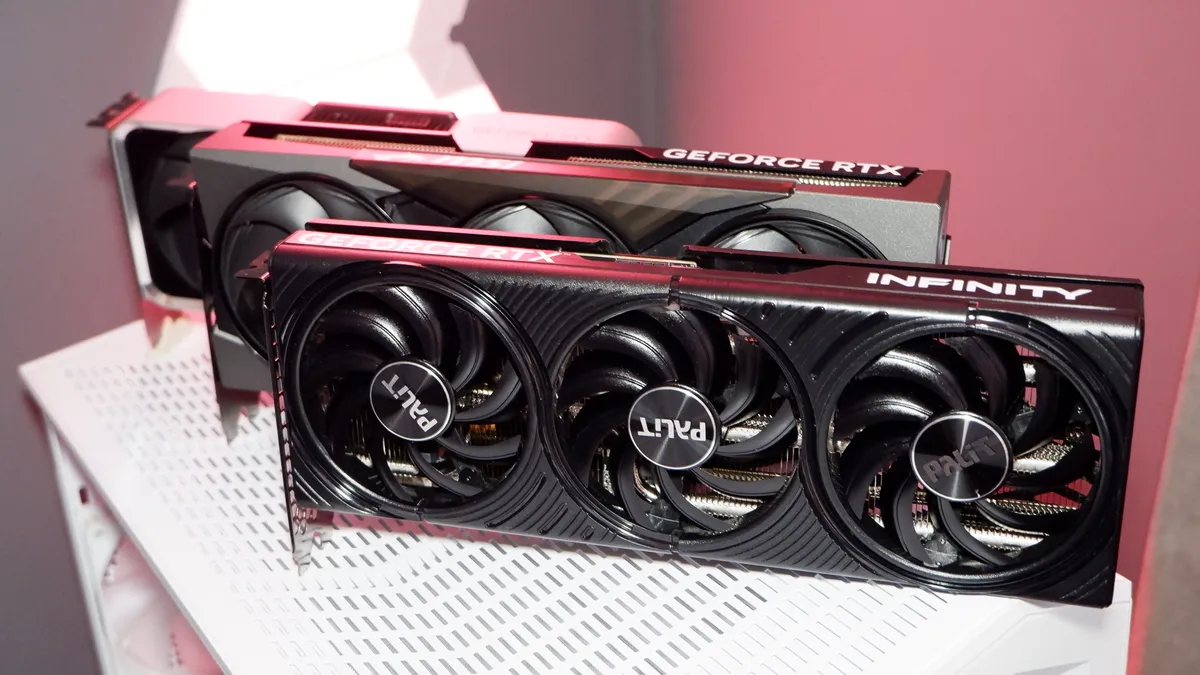
It's as to exactly how many GPUs Nvidia or AMD sells each generation. What we do know, however, is that in 2025 we're still seeing prices reflective of that crypto-influenced and pandemic-tainted period. That suggests sales are reasonably healthy, and that Nvidia (and to , AMD) sees no reason to drop prices back to pre-boom levels. If customers are prepared to pay the extra, then why not sell a graphics card for as much as you can get away with?
We like video games. We want to play the new ones with the settings turned up. We pay the price, if we can. So where does that leave PC gaming moving forward?
I would argue our beloved hobby is becoming more exclusive. Those without the ability to pay for a modern graphics card seem destined to be left behind, which means that, as time goes on, those of us capable of playing the latest, most demanding games become an ever smaller group. Certainly, we as a species are still in the grip of , which means all of our day to day expenses gradually become harder and harder to afford over time.
Then, with modern GPUs demanding more and more power, that's putting further strain on your wallet because of how much it costs to run a high-end rig.
Thanks to graphics card pricing, I'd say modern gaming PCs are becoming even more of a luxury—and in an increasingly economically uncertain world, luxuries tend to be the first thing to fall towards the wayside.
What this means for PC gaming

And what does that mean for game development, an industry already racked by at the triple AAA end of the spectrum? As the hardware to run demanding games becomes increasingly out of the average person's reach, so too does the pool of gamers ready to buy the latest technologically advanced games become ever smaller.
Of course, this is potentially good news for indie devs, and even big studio developers that pay careful attention to the potential hardware requirements when building their creations. I can't be the only one somewhat pleased to see that Battlefield 6 recommends a mere 5-year old for its , which should probably go some way towards its aims of post launch.
I mean, I still think that player target is massively unrealistic, but reasonable hardware requirements will likely equal more customers, and aiming for those that have yet to upgrade their hardware over the past five years is probably a smart move.

We're spending the week airing all our grievances with gaming and computing in 2025. Hit up the for more of what's grinding our gears.
Yet, for those of us that want to see game technology pushed to its limits, or indeed those of us that would like to bring non-PC gamers into the fold, these are troubling times. You can pick up , a high refresh rate 1440p gaming monitor for , and a speedy-as-you-like 1 TB NVMe drive . Chuck in a cheap motherboard, case, and PSU (not too cheap a PSU, mind) and you can get the majority of an excellent gaming rig up and running for around $600-$700.
But a good graphics card? It can potentially cost the same as most of those components combined, turning a budget gaming setup into a $1000+ expense for many.
That's a lot to pay for any hobby, and a hell of a thing to ask of someone more used to spending $500 on a gaming console. Combine that with , and we seem to find ourselves in a tapering market. PC gaming has always been a somewhat pricey affair, but it's graphics card pricing that has really pushed things to previously unseen heights—and I can't help but feel it's bad news for our industry as a whole.
👉👈
1. Best overall:
2. Best value:
3. Best budget:
4. Best mid-range:
5. Best high-end: